
 +86-18378303768
Core Difference: Why Pilates Instructors Move Less (and Yoga Instructors Move More) in Most Classes
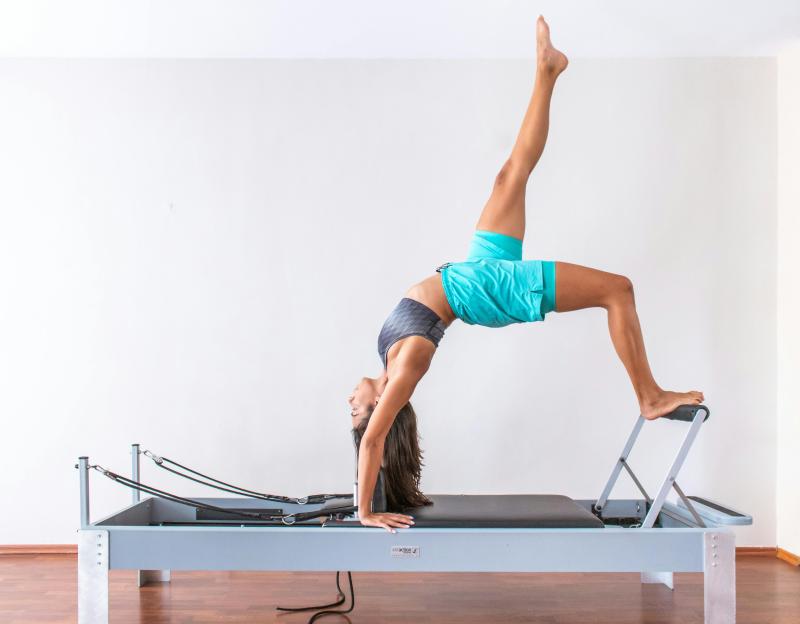
Yoga is a practice of shared movement: Yoga classes (especially vinyasa, hatha, or flow styles) are built around group synchronization. Instructors move with clients to set pace, model proper alignment, and create a collective, meditative energy. For many yoga styles, the teacher’s movement is part of the class experience—clients follow their flow, and the instructor adjusts their own form to demonstrate modifications (e.g., bending knees in downward dog for tight hamstrings).
Pilates is a practice of precision and individual correction: Pilates (especially mat and reformer) prioritizes mind-body connection and proper muscle engagement over group synchronization. A Pilates instructor’s job is to watch every client’s movement closely—spotting a rounded spine in a roll-up, a over-arched lower back in a single-leg stretch, or a lack of core engagement in the hundred. To do this effectively, they can’t flow through the full sequence—they need to move around the room, adjust client hips, and do short, targeted demos to illustrate proper form.
Side-by-Side: How Pilates vs. Yoga Instructors Spend Class Time (Movement Breakdown)
| Class Phase | Beginner Mat Pilates Instructor | Beginner Vinyasa Yoga Instructor |
|---|---|---|
| Warm-Up | Does 1–2 reps of pelvic tilts or cat-cow to demo, then walks around cueing clients to “tuck your pelvis” or “lengthen your spine.” Moves minimally—mostly bending to adjust client form. | Flows through 2 rounds of sun salutation A with the class, pausing to cue alignment (e.g., “press your palms firmly into the mat”). Moves continuously alongside clients. |
| Main Sequence | Demos 1–2 reps of each move (e.g., roll-up, single-leg stretch) to show proper form, then stops to observe clients. Does short, isolated demos of tricky steps (e.g., how to engage core before lifting legs). Spends 70% of time walking, 20% demoing, 10% standing still to observe. | Flows through the full sequence with clients—holding poses for 3–5 breaths, transitioning smoothly between moves. Pauses occasionally to adjust client form, but resumes flowing immediately. Spends 80% of time moving, 20% adjusting clients. |
| Cool-Down | Demos a 1-minute child’s pose or supine stretch to model relaxation, then cues clients to “release your shoulders” or “breathe into your lower back.” Minimal movement. | Leads a guided cool-down with clients—moving through seated forward folds, legs-up-the-wall, and savasana (lies down with clients for the final relaxation). Moves gently alongside clients. |
Exceptions: When Pilates Instructors Move More (and Yoga Instructors Move Less)
When Pilates Instructors Move More
- Small-Group or Private Pilates SessionsIn 1:1 private sessions or small group classes (max 3–4 clients), Pilates instructors often move with their clients. For example: in a private mat Pilates session, your instructor might do the hundred alongside you to model core engagement, or hold a single-leg stretch to show you how to keep your lower back pressed into the mat. With fewer clients to watch, they have space to participate while still giving personalized feedback.
- Dynamic Pilates Styles (e.g., Pilates Flow, Cardio Pilates)Traditional mat Pilates is slow and precise—but modern styles like Pilates flow or cardio Pilates prioritize movement and pace over isolated form work. In these classes, instructors lead the group through continuous, flowing sequences (e.g., linking roll-ups to leg lifts to side planks) and move alongside clients the entire time. This style is perfect if you want to combine Pilates’ core focus with yoga’s group movement energy.
- Beginner-Only Pilates ClassesFor absolute beginners who don’t know basic moves, Pilates instructors often do full sequences to model proper form. For example: in a “Pilates for Beginners” class, an instructor might do 5 reps of the hundred alongside the group to show pacing and breathwork, then pause to correct form.
Related cases
Contact Us
Tel:+8615818656741 Whatsapp:+8618378303768 Email:info@mieuxpilates.com
Website column
Our strengths
-
Material
Mieux Pilates uses premium materials

-
Transportation
Mieux Pilates provides global transportation

-
Warranty
Our Pilates products have a 3-year warranty.

Friendship link:
All rights reserved by mieuxpilates
Guangdong ICP No. 12037206
technical support:Mieux Pilates +86-18378303768