
 +86-18378303768
Why the BB Allegro 2 Reformer Is Tricky for Long Torso Practitioners
When lying supine (on your back) for roll-ups, your ribcage aligns with the shoulder blocks before your tailbone reaches the end of the carriage—leaving your lower body hanging off.
Scoot back to get your tailbone on the carriage, and the shoulder blocks press into your upper back or shoulder blades, limiting your ability to lie flat or extend your spine.
For side-lying work, the carriage’s narrow width and short length restrict your range of motion—you can’t fully extend your legs or reach your arms without hitting the machine’s frame.
Game-Changing Workarounds for Long Torso Frustrations on BB Allegro 2
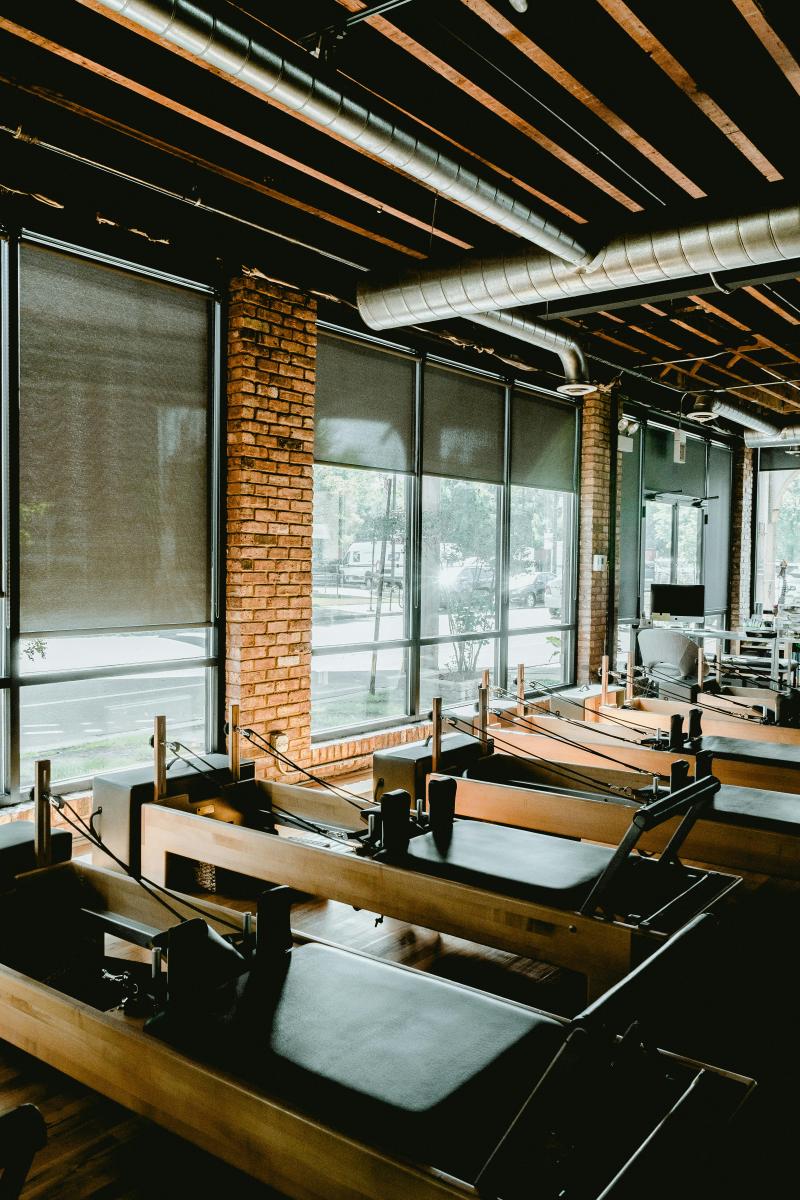
1. Roll-Ups (Fix: Tailbone Hanging Off + Shoulder Block Pressure)
Modification 1: Prop Up Your Hips
Place a folded thick towel or small yoga block under your hips (sacrum area, not your lower back). This elevates your pelvis, shifting your torso forward slightly so your tailbone rests on the carriage and your shoulders clear the shoulder blocks. The prop also tilts your pelvis into a neutral position, making the roll-up more core-focused (less strain on your lower back).
Modification 2: Shorten the Strap Length
If your studio uses reformer straps for roll-ups, ask to shorten the straps by 1–2 notches. This reduces the distance you need to reach to grab the straps, so you don’t have to lean back as far (which pulls your tailbone off the carriage).
Pro Tip: Skip the full roll-up if the shoulder blocks still dig in—opt for a partial roll-up (lift your shoulders and upper back 2–3 inches off the carriage) until you find your sweet spot.
2. Side-Lying Work (Fix: Cramped Range of Motion)
Modification 1: Angle Your Body (Don’t Lie Parallel to the Frame)
Instead of lying perfectly parallel to the reformer’s length, angle your body 15–20 degrees toward the center of the carriage. This shifts your torso away from the edge, giving your legs and arms more space to move. Your core will still engage—you’re just using the carriage’s width more effectively.
Modification 2: Use a Strap to Limit Leg Lift Height
If your top leg hits the reformer frame when lifting, loop a strap around both ankles and keep the strap taut. This limits your leg lift to a comfortable range (no more hitting the frame) while still targeting your obliques and glute medius.
Pro Tip: Place a towel between your knees to reduce friction and keep your hips aligned—this is especially helpful for long torsos, which are prone to hip rotation during side work.
3. Supine Leg Presses (Fix: Lower Back Strain From Misalignment)
Modification: Bend Your Knees More Than Usual
Instead of starting with your knees at 90 degrees, bend them to a 110–120 degree angle (your shins will be more vertical). This shifts your weight toward your hips, keeping your tailbone on the carriage and your lower back pressed into the mat. Use light spring tension to prioritize control over resistance—you don’t need heavy springs to feel the work in your glutes.
Bonus Fix: Place a small towel under your head to align your spine—this reduces neck strain, which is common for long-torso people who cranes their necks to see the instructor.
3 Pro Tips to Advocate for Yourself in Class
Be Specific About Your Frustration
Instead of saying, “This reformer is too small,” say: “When I do roll-ups, my tailbone hangs off the carriage, and if I scoot back, the shoulder blocks dig into my shoulders. Can we try propping my hips with a towel?” Specific feedback helps your instructor problem-solve with you.


 +86-18378303768