
 +86-18378303768
Why Pilates Breathing Feels So Hard (For You, Specifically)
- Post-Surgery Core & Breathing Connection Is WeakDiastasis recti disrupts the link between your deep core muscles (like the transversus abdominis) and your diaphragm (the muscle that drives breathing). Your surgery is rebuilding that connection, but your body is still learning to engage your core without straining your healing abdomen—and Pilates breathwork requires that exact coordination.
- You’re Learning Two New Skills at OnceYou’re already adjusting to mini reformer movements (how to hold the straps, adjust spring tension, stay balanced) and trying to remember when to inhale/exhale. It’s like learning to drive and navigate a new city at the same time—overwhelming, but totally manageable with practice.
- Non-Athletic Background Means No “Default” Breath PatternIf you haven’t done structured fitness before, your body hasn’t learned to sync breath with movement. Cardio and resistance band work use casual breathing, but Pilates breathwork is intentional—and that takes time to build into a habit.
The #1 Safe Breathing Technique for Post-Diastasis Recti Beginners (Mini Reformer-Friendly)
How to Practice Lateral Breathing (Off the Reformer First!)
Lie on your back with knees bent, feet flat on the floor (keep your core relaxed—no squeezing!). Place one hand on your chest, the other on the side of your ribcage.
Inhale slowly through your nose for 4 counts. Focus on filling your lungs from the sides—your ribcage should expand outward (your side hand will rise), while your chest stays still. Do not let your belly bulge—this protects your healing diastasis recti.
Exhale fully through pursed lips for 6 counts. Squeeze the air out from your ribs, feeling them shrink back toward your spine. You’ll notice a gentle engagement of your deep core as you exhale—this is exactly what you want.
Repeat 5-10 times daily. This trains your body to breathe with your ribs (not your chest or belly), which is the key to Pilates breathwork.
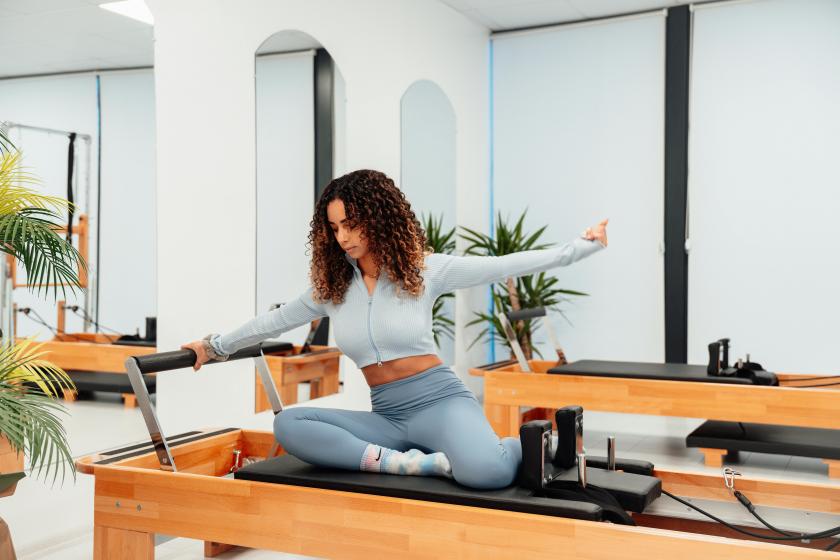
How to Sync This with Mini Reformer Moves (Beginner-Friendly)
Inhale to prepare (movement toward your body), Exhale to work (movement away from your body)
| Mini Reformer Move | Breathing Timing | Post-Surgery Tip |
|---|---|---|
| Footwork (Basic Heel Press) | Inhale to bend your knees (bring heels toward your glutes—prep). Exhale to press your heels away, straightening your legs (work). | Keep spring tension light (1-2 springs). Focus on exhaling fully to engage your core—this stabilizes your lower back. |
| Arm Pulls (Seated, Light Tension) | Inhale to bring the straps toward your chest (prep). Exhale to pull the straps away from your body (work). | Sit tall, keep your shoulders relaxed. Exhaling helps you avoid hunching forward (which strains your posture). |
5 Pro Tips to Master Pilates Breathing (No Pressure, No Perfection)
Related cases
Contact Us
Tel:+8615818656741 Whatsapp:+8618378303768 Email:info@mieuxpilates.com
Website column
Our strengths
-
Material
Mieux Pilates uses premium materials

-
Transportation
Mieux Pilates provides global transportation

-
Warranty
Our Pilates products have a 3-year warranty.

Friendship link:
All rights reserved by mieuxpilates
Guangdong ICP No. 12037206
technical support:Mieux Pilates +86-18378303768