
 +86-18378303768
How do I find work after certification?
And how do I stand out in a market that feels oversaturated with instructors?
Part 1: Top Recommendations for the Start of Your Pilates Instructor Training
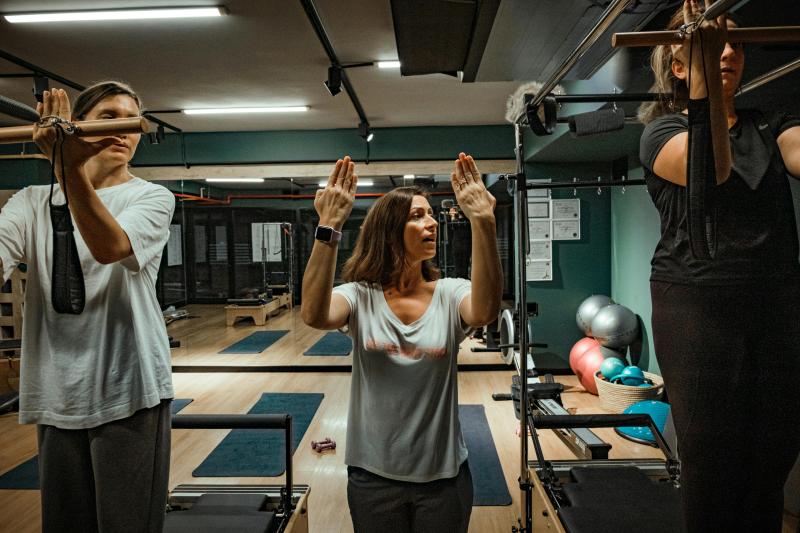
1. Prioritize “Feel” Over “Perfection” (Even If You’re an Advanced Practitioner)
Do this: For every exercise (e.g., reformer footwork, mat roll-up), ask yourself: What muscles should the client feel? What are the common mistakes? How do I modify this for someone with knee pain or limited mobility?
Pro tip: Practice teaching moves to friends or family before your training practicum. Even if they’ve never done Pilates, their questions (“Why does my back hurt?”) will teach you to cue more clearly.
2. Take Detailed Notes (Especially on Modifications & Contraindications)
Focus on: Contraindications (e.g., why pregnant clients should avoid full supine roll-ups), adaptive moves (e.g., how to do a reformer squat for someone with hip replacements), and prop use (towels, blocks, bands) for accessibility.
Tool hack: Use a notebook divided into sections (mat, reformer, Cadillac, chair) to organize modifications by body type or injury.
3. Embrace the Practicum (Even If It’s Scary)
Do this: Volunteer to teach the trickiest moves (e.g., advanced Cadillac back bends) during practicum. Your instructor’s feedback on what you missed will be far more valuable than sticking to “easy” mat moves.
Mindset shift: Every mistake (e.g., forgetting to cue core engagement) is a chance to improve—no one expects a trainee to be perfect.
4. Shadow Experienced Instructors (Outside of Your Training Program)
What to watch for: How they adjust cueing for different learning styles (visual learners need demos; kinesthetic learners need tactile cues), how they manage class energy, and how they handle tricky client questions.
How to ask: Email studios and say: “I’m a Pilates instructor trainee with [Program Name]—would I be able to shadow a few classes to learn from your team?” Most studios are happy to say yes (it’s free for them, and you might become a hire later!).
5. Learn the Business Side (It’s Not Optional)
Ask your trainer: How do studios price classes? What’s the difference between independent contractors and employed instructors? How do you market private sessions?
Bonus: Take a free online course on small business basics (e.g., invoicing, client communication)—it will set you apart from trainees who only know exercise theory.


 +86-18378303768